Interior Glass Wall Specialists

Designing for Performance: Trends in Interior Wall Systems Across Workplace, Healthcare, and Education
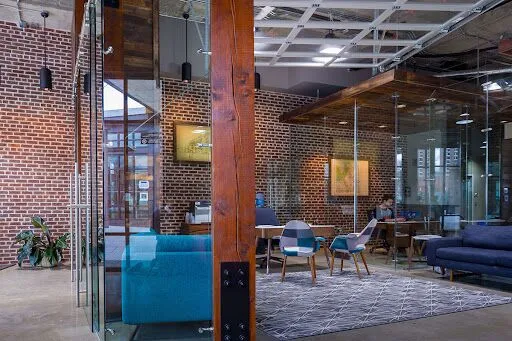
As we navigate 2026, the built environment is undergoing a fundamental shift from static enclosures to responsive, human-centric ecosystems. The primary drivers—human performance, privacy, and holistic health—are no longer aspirational “add-ons” but core requirements for any modern facility.
This post explores the evolution of interior wall systems, examining how modular and permanent partitions are being redesigned to solve the unique challenges of the post-hybrid office, the high-acuity healthcare setting, and the neuro-inclusive classroom. We specifically highlight how high-performance glass wall systems serve as a bridge between the need for visual connectivity and the demand for acoustic integrity.
I. The Workplace: From Open Plans to “Ecosystem” Zoning
The modern office is no longer a sea of desks but a destination for high-value collaboration and deep focus. In 2026, the “Privacy Paradox”—the struggle to find quiet in an open environment—is being addressed through sophisticated vertical boundaries.
- Micro-Zoning and High-Acuity Privacy: Large, undifferentiated floor plates are being replaced by “micro-zones.” This is achieved through modular wall systems that can be reconfigured without the debris or downtime of traditional drywall. These systems allow companies to create “Deep Focus” pods and “Zoom Rooms” that provide 100% acoustic isolation in the middle of a social hub.
- Intelligent Serenity: Modern wall systems are increasingly “smart.” Integrated sensors within partitions now monitor occupancy, CO2 levels, and even light quality, automatically adjusting the environment to optimize cognitive performance.
The Biomorphic Aesthetic: There is a move away from rigid, 90-degree angles. Curved wall systems and organic silhouettes are trending, as research into neuroarchitecture shows that rounded forms lower cortisol levels and make professional environments feel safer and more welcoming.
II. Healthcare: The Evolution of “Supportive” Containment
In healthcare, the wall is a clinical tool. The trends for 2026 focus on infection control that doesn’t feel institutional and acoustic privacy that protects both patient dignity and staff focus.
- Modular Infection Control (ICRA Compliance): The industry is moving away from disposable plastic barriers during renovations. Reusable, hard-wall modular systems have become the gold standard. These systems provide airtight seals for negative-air operations while maintaining a finished, professional look that reduces patient anxiety during facility upgrades.
- Acoustics as a Clinical Requirement: Noise is now treated as a medical risk. Research links high decibel levels in hospitals to increased medication errors and slower patient recovery. High-STC wall systems are being implemented in exam and consult rooms to ensure that sensitive HIPAA-protected conversations remain private, even in high-traffic corridors.
- Onstage/Offstage Planning: Sophisticated wall placements are being used to separate “onstage” patient areas from “offstage” clinical support zones. This physical decoupling reduces visual clutter and noise, creating a calmer healing environment.
III. Education: The Agile and Inclusive Learning Environment
Education design in 2026 is defined by “invisible technology” and sensory regulation. The classroom wall is no longer just a divider; it is a functional surface that supports varied learning modalities.
- The Seamlessly Reconfigurable Classroom: Pedagogy now shifts from lectures to small-group breakouts in minutes. Operable wall systems allow for “scaled” learning—merging two classrooms for collaborative projects or sealing off a small group for targeted instruction without sound leakage.
- Neuro-Inclusive Design: Schools are prioritizing “sensory nooks” and “reset rooms.” Wall systems with high acoustic ratings are used to create these low-stimulation sanctuaries, allowing neurodivergent students to self-regulate within the school day without being isolated from the campus community.
- The “Invisible” Tech Wall: The trend is moving away from gadget-heavy rooms toward walls that house hidden infrastructure. Smart screens, integrated audio, and wireless charging are built directly into the partition systems, reducing visual “noise” and allowing the focus to remain on the teacher and peers.
IV. The Solution: High-Performance Glass Systems
Across every sector, the ultimate design challenge is the same:
How do we provide daylight and transparency without sacrificing silence and privacy?
Traditional drywall provides privacy but blocks light; standard glass provides light but leaks sound. High-STC (Sound Transmission Class) glass wall systems, like those from Avanti Systems, are the bridge.
Why High-STC Glass is the Optimal Choice:
- Acoustic Excellence (STC 35 to 50+): While typical glass partitions offer minimal sound protection, Avanti’s double-glazed and acoustic systems achieve ratings comparable to insulated solid walls. This ensures that a boardroom, a patient consult room, or a school counselor’s office remains private while remaining visible.
- Health and Hygiene: In 2026, the “cleanability” of a surface is paramount. Glass is non-porous and withstands rigorous disinfection protocols, making it superior to fabric-wrapped panels or drywall in healthcare and high-traffic education settings.
- Visual Connectivity and Well-being: Access to natural light is proven to boost productivity by 6% and well-being by 15%. Glass wall systems allow “borrowed light” to reach the interior of a building, reducing the need for artificial lighting and supporting circadian rhythms.
- Sustainability and Demountability: Unlike permanent drywall, modular glass systems are “demountable.” As a company grows or a school’s needs change, these walls can be moved and reinstalled, significantly reducing embodied carbon and construction waste.
Conclusion
The walls of 2026 are no longer just barriers, they are high-performance filters that manage light, sound, and air. By choosing sophisticated systems—particularly high-STC glass partitions—architects and facility managers can create spaces that are as quiet as they are bright, and as private as they are collaborative.
Connect with Us
Avanti Systems specializes in the intersection of architectural aesthetics and human performance. Whether you are navigating a complex healthcare renovation or designing a next-generation workspace, our experts can help you select the right wall systems to meet your goals.
Would you like to see how Avanti Systems can transform your space?
- Contact us today for a consultation or a deep dive into our acoustic testing data.
- Visit our website: www.avantisystemsusa.com
- Email our design team: sales@avantisystemsusa.com