Interior Glass Wall Specialists

Renovating Older Buildings: What Architects Should Consider Before Choosing Glass Wall Systems
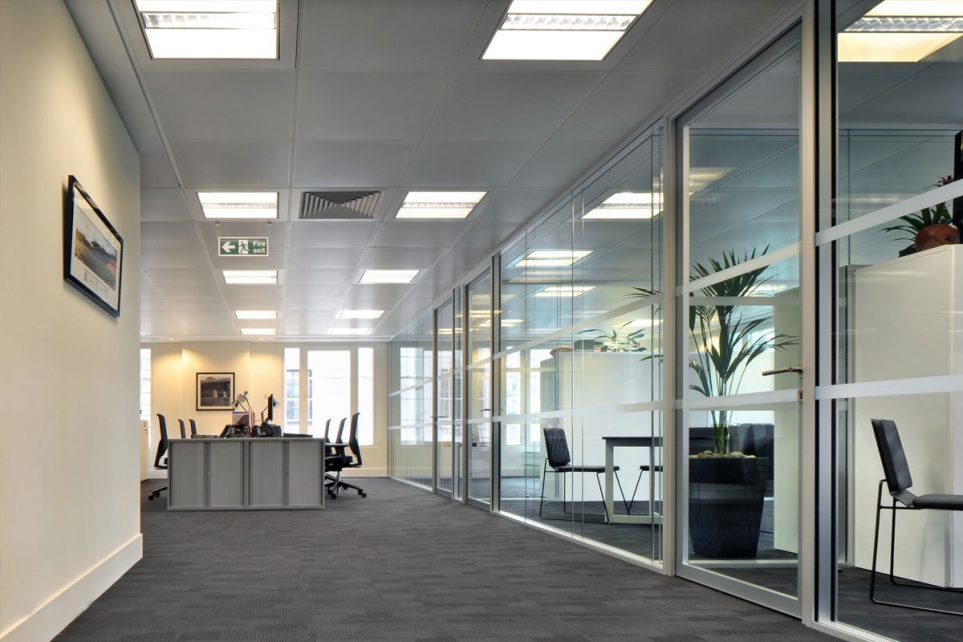
Across North America, older buildings are increasingly being repurposed into modern office environments. Historic industrial spaces, aging office buildings, and boutique commercial properties are being transformed into workspaces designed for modern work.
While these projects offer architectural character and unique design opportunities, they also introduce challenges that don’t exist in new construction. Irregular layouts. Uneven floors. Unexpected structural elements. For architects and designers, the success of these projects often depends on selecting systems that can adapt to existing conditions while designing an environment for performance that the modern workplaces require.
Interior glass wall systems—especially single and double glazed solutions—play a major role in achieving that balance.
Step 1: Evaluate the acoustic needs of the space
One of the first considerations when designing glass partitions in repurposed buildings is sound control. Different office environments require different levels of acoustic privacy. For example:
Spaces that typically require moderate sound separation:
- Open office meeting rooms
- Team collaboration rooms
- General office spaces
Spaces that require higher sound privacy:
- Conference rooms
- Executive offices
- Legal offices
- Financial services environments
- Healthcare consultation rooms
Single-glazed systems can provide excellent transparency and clean architectural lines, making them ideal for many workplace environments. However, when acoustic performance becomes a priority, double-glazed systems offer significant advantages.
Step 2: Understand the difference between single and double-glazed systems
At a basic level, the difference is simple. A single-glazed system uses one piece of glass within the wall system. A double-glazed system uses two panes of glass separated by an air cavity, which significantly improves sound dampening.
For example, a typical Solare™ Double Glazed Wall System includes:
- Two independent glass panels
- A two-inch airspace between them
- A wider structural channel to support the additional glass mass
This configuration allows sound waves to dissipate before traveling through the wall, improving acoustic performance.
In environments where privacy and concentration are critical, this difference can be noticeable.
Step 3: Balance performance with budget
In renovation projects, budgets are always a factor. Because double-glazed systems include more glass, more material, and additional labor, they naturally cost more. For many projects, architects find that single-glazed systems provide the right balance between aesthetics and budget. That’s why, in many office environments, single-glazed solutions remain the most common choice.
However, when projects require higher acoustic performance—such as legal offices, financial institutions, or healthcare facilities—double-glazed systems become a valuable design investment. The key is aligning the system with the specific performance requirements of the space.
Step 4: Consider door design and hardware coordination
Doors are often the weakest point in acoustic performance. Even small operational gaps around a door can allow sound to travel between spaces. For projects where sound control is important, proper door specification becomes critical. Double-glazed door systems can incorporate features such as:
- Continuous perimeter seals
- Drop-down seals at the base of the door
- Coordinated hardware designed to minimize sound leakage
These components help ensure the wall system and the door work together as a complete acoustic solution.
Step 5: Plan for floor-to-ceiling installation
When designing for sound control, installation details matter. For example, glass walls designed for acoustic performance typically need to run from floor to ceiling. Stopping short of the ceiling or leaving gaps can compromise the system’s acoustic integrity. This is especially important in renovation projects where ceiling conditions may vary across the building.
Early coordination between architects, contractors, and glazing teams helps ensure the system performs as intended.
Step 6: Prepare for real-world building conditions
Renovated buildings rarely provide perfectly level surfaces. Uneven floors, slight structural variations, and irregular dimensions are common. Fortunately, modern glass wall systems are designed with tolerances that allow installers to make on-site adjustments. Experienced glazing teams can adapt systems by:
- Adjusting setting blocks
- Modifying track placement
- Customizing panel alignment
These adjustments allow the system to fit the building while maintaining the desired architectural appearance.
Choosing the right system for the project
Every renovation project is different. Some spaces prioritize openness and visual transparency. Others require stronger acoustic separation.
At Avanti Systems USA, our Solare™ Single Glazed and Solare™ Double Glazed Wall Systems allow architects to select the level of performance that best fits the design goals of the project.
Single-glazed systems deliver:
- Clean, minimalist aesthetics
- Maximum transparency
- Cost-efficient installation
Double-glazed systems provide:
- Enhanced acoustic performance
- Greater sound privacy
- Ideal solutions for conference rooms and executive spaces
Both systems are designed to integrate seamlessly with modern office architecture while adapting to the unique conditions often found in renovated buildings.
Designing modern workplaces inside historic structures
Repurposing older buildings into modern workplaces requires creativity, flexibility, and thoughtful system selection. When the right architectural solutions are chosen, these projects can combine the character of historic structures with the functionality of contemporary offices.
Glass wall systems play a key role in that transformation—helping architects create spaces that balance transparency, privacy, and adaptability. If you’re planning a renovation or adaptive reuse project, our team can help guide specification and system selection.
Would you like to see how Avanti Systems helps architects on adaptive reuse projects?
- Contact us today for a consultation or a deep dive into our acoustic testing data.
- Visit our website: www.avantisystemsusa.com
- Email our design team: sales@avantisystemsusa.com